At Sky Bluer Environmental Technology Co., Ltd, our advanced rolling mills transform high-purity oxygen-free copper rods (C10100, C10200, TU1) into rectangular magnet wire with precise width, thickness, and edge geometry. In this blog, we will guide you through how our rolling mills shape magnet wires efficiently and reliably.
Advanced Micro Rolling Technology for Rectangular Copper Wire
Modern micro rolling units are designed to produce high-precision rectangular copper wire at stable speeds of up to 100 m/min, depending on the material grade and final dimensions. At Sky Bluer Environmental Technology Co., Ltd, our rolling systems are developed with a compact production layout that integrates a two-high breakdown rolling stand with 160 mm rolls, a die holder, a micro edger with 72 mm rolls, and a two-wheel capstan of approximately 400 mm diameter, allowing efficient production within a relatively small installation space.
The two-high breakdown rolling configuration transforms incoming round copper wire into a stable rectangular profile while maintaining excellent tensile strength and ductility. Compared with more complex rolling structures, this design reduces mechanical complexity, lowers maintenance requirements, and shortens downtime for roll replacement. To maintain dimensional stability during the rolling process, tension control systems with dancer units positioned before and after the rolling section ensure consistent wire tension throughout the production line.
An integrated precision micro-edger controls the final wire width and helps eliminate edge defects, improving both product consistency and rolling efficiency. The system also includes a spray lubrication and filtration unit that continuously removes contaminants from the process fluid, ensuring clean operation and stable product quality.
Typical Rolling Process for Rectangular Copper Magnet Wire
The production of rectangular copper magnet wire relies on a well-coordinated rolling line in which each section ensures stable material flow and precise dimensional control. The process typically begins with a pay-off system feeding round copper wire into the line under controlled tension. In most magnet wire applications, the raw material is high-purity oxygen-free copper rod, commonly grades such as C10200 (Cu-OF), C10100 (Cu-OFE), or TU1, which provide excellent electrical conductivity, ductility, and stability during multiple rolling passes. Servo-driven dancer systems maintain consistent tension throughout the line, preventing fluctuations that could affect the final wire geometry.
Before entering the rolling mill section, the wire passes through cleaning and brushing stations to remove surface oxides or contaminants, followed by drying units to prepare the material for deformation. The copper wire is then processed through rolling and shaping units, where several passes gradually transform the round conductor into a rectangular profile with controlled thickness, width, and edge geometry. For typical magnet wire applications, finished conductors usually fall within a width range of about 1.5–12 mm and a thickness range of 0.8–5 mm, with dimensional tolerances generally maintained within ±0.005–0.02 mm, depending on the required insulation process and end-use standards.
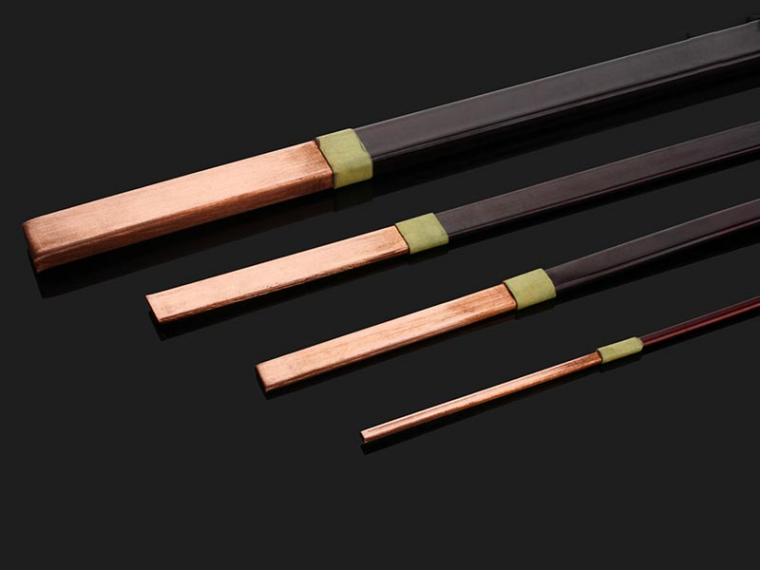
To maintain proper metallurgical properties after cold deformation, inline annealing systems can be integrated into the production line, restoring the ductility and electrical performance of the copper conductor. Throughout the process, precision measurement equipment continuously monitors the wire dimensions to ensure stable product quality. At the end of the wire rolling production line, high precision take-up spoolers wind the finished copper rectangular wire evenly, preparing it for subsequent processes such as enameling, paper insulation, or CTC conductor manufacturing used in transformers and high-efficiency electric motor windings.
Precision Control in the Rolling Process
Precision control is a critical factor in the rectangular copper wire rolling process, because even small dimensional deviations can influence winding density, insulation quality, and electrical performance in motors and transformers. For example, a dimensional variation of only ±0.01 mm in thickness can significantly affect slot fill factor and winding accuracy in high-density motor coils.
Modern rolling mills therefore rely on tightly controlled parameters, including:
Control Parameter | Typical Range | Importance |
Roll gap | 0.8–5 mm depending on product | Determines final thickness |
Rolling pressure | 50–200 kN per stand | Controls deformation stability |
Line speed | 20–100 m/min | Maintains process consistency |
Wire tension | 5–50 N depending on wire size | Prevents dimensional fluctuation |
During high-precision copper wire rolling, deformation is applied gradually through multiple rolling stages. Each rolling pass typically reduces the cross-section by 10–25%, allowing the conductor to maintain a uniform grain structure and stable mechanical properties. Accurate roller alignment—often controlled within ±0.002–0.005 mm—ensures uniform thickness distribution and prevents internal stresses that may cause dimensional instability.
Advanced rolling mills integrate closed-loop servo drive systems and laser measurement sensors capable of measuring conductor width and thickness with an accuracy of approximately ±0.001–0.003 mm. These sensors continuously monitor the wire profile, and if deviations occur, the control system automatically adjusts rolling parameters in real time to maintain tight tolerances across long production runs.
Consistent precision during rolling also improves manufacturing efficiency by:
l reducing scrap rates by 10–20%
l minimizing corrective rolling passes
l improving conductor surface roughness (typically Ra ≤ 0.8 μm)
l ensuring compatibility with downstream enameling or insulation processes
For magnet wire manufacturers, combining advanced automation with proven process engineering—such as the solutions developed by Sky Bluer—ensures reliable product quality and cost-effective production for applications including transformer windings, generators, and rectangular magnet wire for EV motors.
Raw Materials for Rectangular Copper Magnet Wire Production
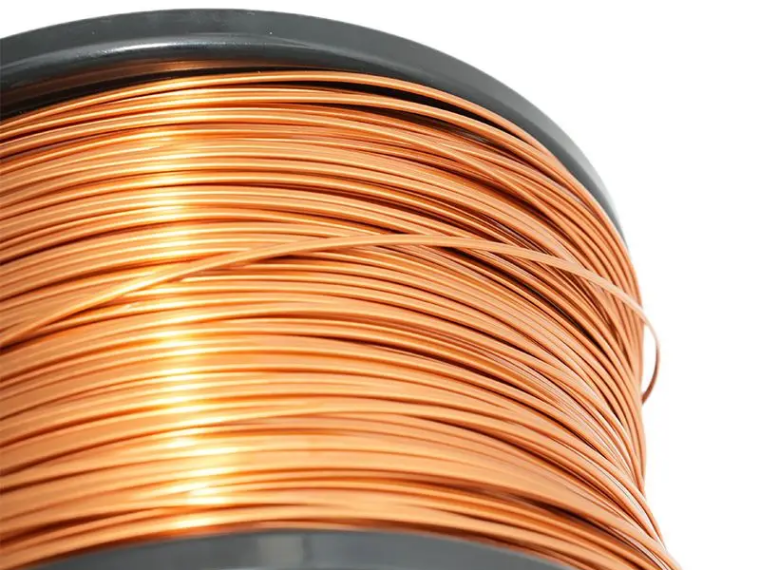
The performance of rectangular magnet wire largely depends on the purity and metallurgical quality of the copper conductor used at the beginning of the rectangular copper wire manufacturing process.High-performance magnet wires are typically produced from oxygen-free copper grades such as C10100, C10200, and TU1, which are widely used in high-efficiency electrical equipment.
Typical Properties of Oxygen-Free Copper
Property | Typical Value |
Copper purity | 99.95 – 99.99 % |
Electrical conductivity | 100 – 101 % IACS |
Oxygen content | ≤ 0.001 % |
Thermal conductivity | Very high |
Ductility | Excellent for cold rolling |
Oxygen-free copper is particularly suitable for magnet wire production because of its low oxygen content and stable metallurgical structure. Compared with standard electrolytic tough pitch copper, these grades provide improved resistance to hydrogen embrittlement, better thermal conductivity, and excellent ductility during cold deformation processes such as drawing and rolling. These properties allow the conductor to undergo multiple rolling passes without cracking while maintaining uniform grain structure and mechanical strength.
In a typical copper wire shaping process, the raw material enters the flat copper wire production line in the form of round copper rod or pre-drawn wire. The material must exhibit consistent composition, stable hardness, and clean surface quality to ensure smooth deformation in the rolling mill for rectangular wire. High-quality copper materials also support subsequent processes such as annealing, enameling, or paper insulation, which are essential for applications including transformers, generators, and rectangular magnet wire for EV motors.
By carefully selecting high-purity copper and controlling its metallurgical condition before rolling, manufacturers can ensure stable deformation behavior, minimize defects, and achieve the tight dimensional tolerances required for modern high-efficiency electrical equipment.
Multi-Stand Rolling Technology for Copper Magnet Wire
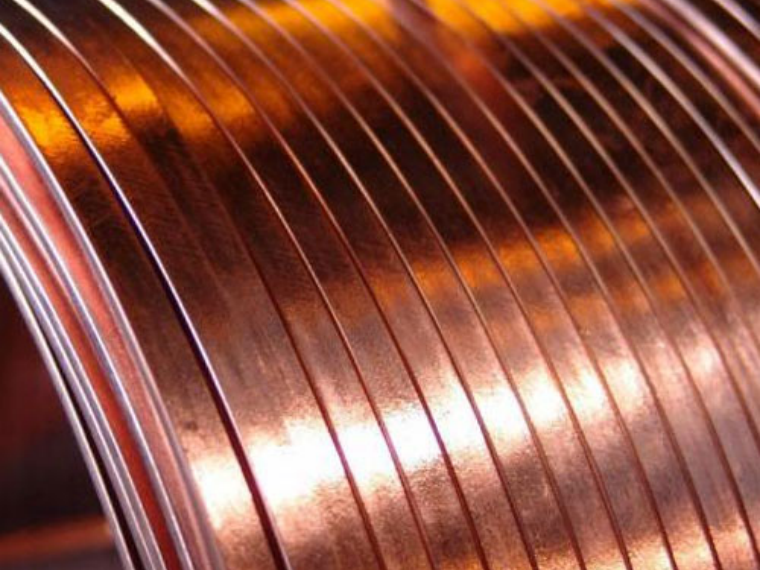
Modern rectangular copper wire manufacturing process lines increasingly rely on multi-stand rolling technology to achieve stable deformation, high dimensional accuracy, and consistent metallurgical properties. In this configuration, the copper conductor passes sequentially through several rolling stands, each applying a controlled reduction in thickness and width. Typically, each rolling pass reduces the conductor cross-section by approximately 10–25%, allowing the material to deform gradually while maintaining a uniform grain structure. This gradual deformation strategy minimizes internal stress and improves surface quality, which is essential for high-performance magnet wire used in electric motors, transformers, and EV traction systems.
In a typical rolling mill for rectangular wire, the production line is divided into roughing, intermediate, and finishing rolling stages. Roughing stands perform the initial cross-section reduction, often accounting for 40–60% of the total deformation, transforming round copper wire into a preliminary flat profile. Intermediate stands then refine the conductor shape and stabilize material flow, while finishing stands deliver the final conductor dimensions with tight tolerances—typically within ±0.005–0.02 mm for thickness and width. Each rolling stand may be driven by independent motors or synchronized servo drive systems, allowing operators to adjust rolling speed and reduction ratios precisely according to the copper grade and required wire dimensions. In modern production lines, rolling speeds commonly reach 60–100 m/min, depending on conductor size and rolling configuration.
Multi-stand rolling also enhances productivity and process stability. By distributing deformation across multiple stands, the rolling load on each roll set is reduced—often lowering the load per stand to 50–150 kN, depending on conductor size—which improves roll life and enables higher production speeds. In continuous production environments, multi-stand systems can be integrated with upstream processes such as copper rod casting and rod breakdown rolling, as well as downstream processes like wire drawing, inline annealing, enameling, or insulation coating. This integrated approach forms the backbone of modern flat copper wire production lines, enabling reliable large-scale manufacturing of high-precision rectangular magnet wire for advanced electrical applications.
Edge Rolling and Width Control in Rectangular Wire Production
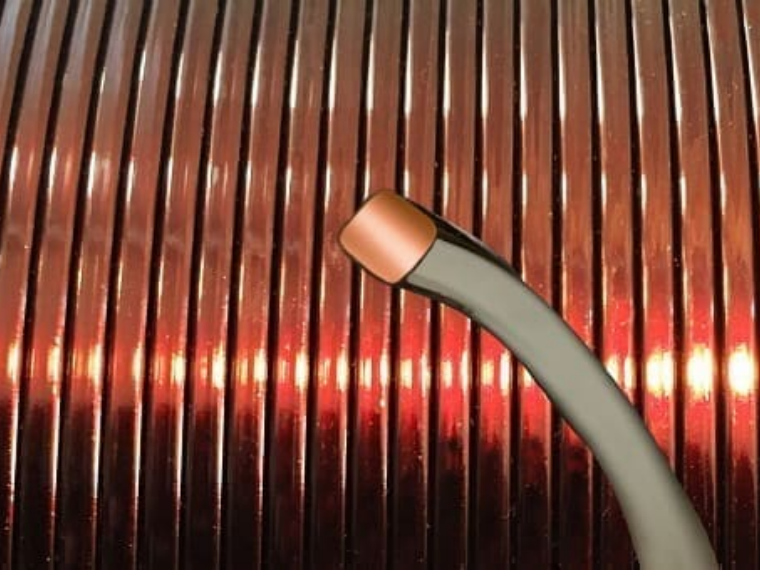
In the rectangular copper wire rolling process, controlling the wire width and edge geometry is essential for achieving consistent conductor dimensions and preventing defects during winding or insulation. After the initial flattening stage, the wire typically passes through edge rolling units or micro edgers, which apply controlled lateral pressure to refine the final width and edge shape.
Edge rolling works by using vertically oriented rolls that compress the sides of the partially flattened wire. This process compensates for the natural lateral spread that occurs during flat rolling and ensures that the conductor maintains the specified width tolerance. Modern rolling mills for rectangular wire often integrate servo-controlled edger stands, allowing precise adjustment of roll gap and rolling force during operation.
A micro edger for rectangular wire also improves product quality by eliminating burrs, rounding or chamfering edges, and preventing surface defects that could damage insulation layers. Combined with inline width measurement systems and automatic adjustment mechanisms, edge rolling technology ensures stable geometry, improved surface finish, and reliable dimensional consistency across long production runs.
Through accurate edge rolling and width control, Sky Bluer China can produce rectangular copper conductors that meet strict tolerances required for high-performance electrical applications such as transformer windings and high-efficiency motor coils.
Process Control and Measurement Systems in Modern Rolling Mills
In the rectangular copper wire rolling process, controlling edge geometry and conductor width is essential for maintaining stable dimensional tolerances and high winding quality. During flat rolling, copper naturally spreads laterally as thickness is reduced, with lateral expansion typically reaching 5–15% of the original wire diameter. Without proper control, this material flow can cause irregular edges, width variation, or burr formation. To address this, modern rolling mills for rectangular wire integrate dedicated edge rolling systems to precisely regulate lateral deformation.
A key component is the micro edger for rectangular wire, which uses vertically positioned rolls to apply controlled pressure to both sides of the flattened conductor. With adjustable roll gaps typically ranging from 1–12 mm and rolling forces of about 10–50 kN, this copper wire edge rolling technology compensates for width expansion created in the main rolling stands and forms a clean rectangular profile. Through precise adjustment, manufacturers can maintain width tolerances within approximately ±0.005–0.015 mm while improving edge straightness and surface quality.
Advanced flat copper wire production lines also integrate inline laser measurement systems capable of measuring conductor width with an accuracy of about ±0.002–0.005 mm. These sensors continuously monitor the wire profile and automatically adjust edger settings if deviations occur, enabling stable production even at speeds of 60–100 m/min.
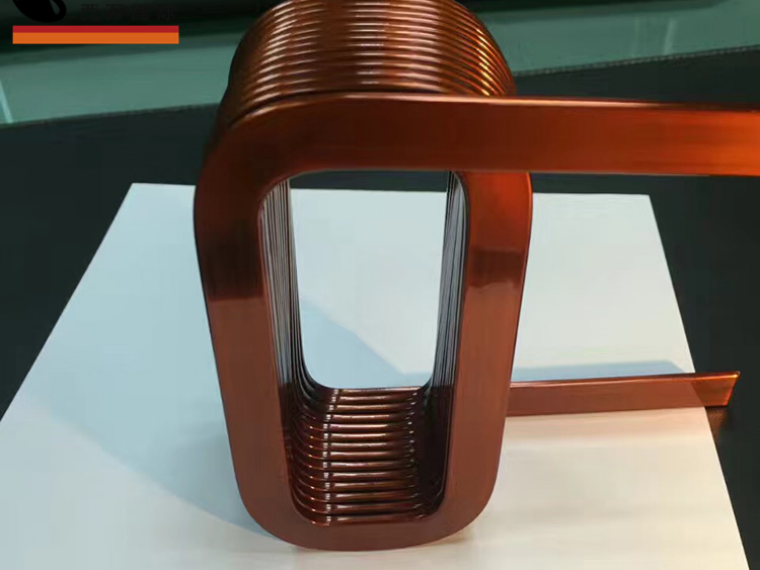
Through precise edge rolling and width control, the finished rectangular conductor achieves the geometry required for compact windings and high slot fill factors—often above 70%—in applications such as transformers, generators, and rectangular magnet wire for EV motors.
About company
Sky Bluer Environmental Technology Co., Ltd is a China-based engineering company providing mechatronic solutions worldwide for metal strip processing, precision rolling of metal wires and narrow strips, and high-performance machine drives. If you are looking for a turnkey solution for complete rectangular copper magnet wire production or processes for shaping magnet wire, we are here to help. Please feel free to contact us for more information and technical support.
8 Common Questions from Magnet Wire Producers
1. What is the typical rectangular copper wire manufacturing process?
The rectangular copper wire manufacturing process generally includes rod breakdown, multi-pass rolling, edge shaping, tension control, and optional inline annealing. Round copper wire is gradually flattened through rolling stands and edgers until the required width, thickness, and edge geometry are achieved. The finished conductor is then wound for further processes such as enameling or insulation wrapping.
2. What type of rolling mill is used for producing rectangular wire?
Manufacturers typically use a rolling mill for rectangular wire designed with flat rolling stands and precision edge rolling units. These mills control thickness reduction and width shaping simultaneously, ensuring high dimensional accuracy and consistent surface quality during continuous production.
3. How does a flat copper wire mill differ from a conventional wire rolling mill?
A flat copper wire mill is specifically engineered for shaping conductors into rectangular or flat profiles rather than simple diameter reduction. It usually includes micro edgers, precision roll gap control, and advanced tension systems to maintain strict tolerances required for magnet wire applications.
4. Why is inline tension control important in wire rolling?
Inline tension control in wire rolling ensures that the copper conductor moves smoothly through each rolling stand without slack or excessive stress. Stable tension prevents dimensional variation, improves surface quality, and helps maintain consistent thickness and width across long production lengths.
5. What role do servo-driven dancer systems play in the rolling line?
Servo-driven dancer systems for wire rolling automatically regulate wire tension between different processing sections. By compensating for speed fluctuations between the pay-off, rolling mill, and take-up units, they help maintain a stable material flow and protect the conductor from stretching or deformation.
6. How is rectangular magnet wire used in EV motors?
Rectangular magnet wire for EV motors is widely used in hairpin windings and high-efficiency stator designs. The rectangular profile allows higher slot fill factors compared with round wire, improving power density, thermal performance, and electrical efficiency in electric vehicle traction motors.
7. Can the same rolling technology be used for CTC conductors?
Yes. A similar rolling process for CTC conductors (Continuously Transposed Conductors) is used to produce rectangular copper strands with very tight dimensional tolerances. These strands are later transposed and insulated to form high-capacity conductors commonly used in large power transformers.
8. How does the copper wire shaping process affect final product quality?
The copper wire shaping process directly determines the conductor’s dimensional accuracy, surface finish, and mechanical properties. Precise rolling, edge finishing, and controlled tension ensure that the final wire meets strict standards required for high-performance electrical applications.
